
I Put My Mom First Instead of My Job — and Everything Changed

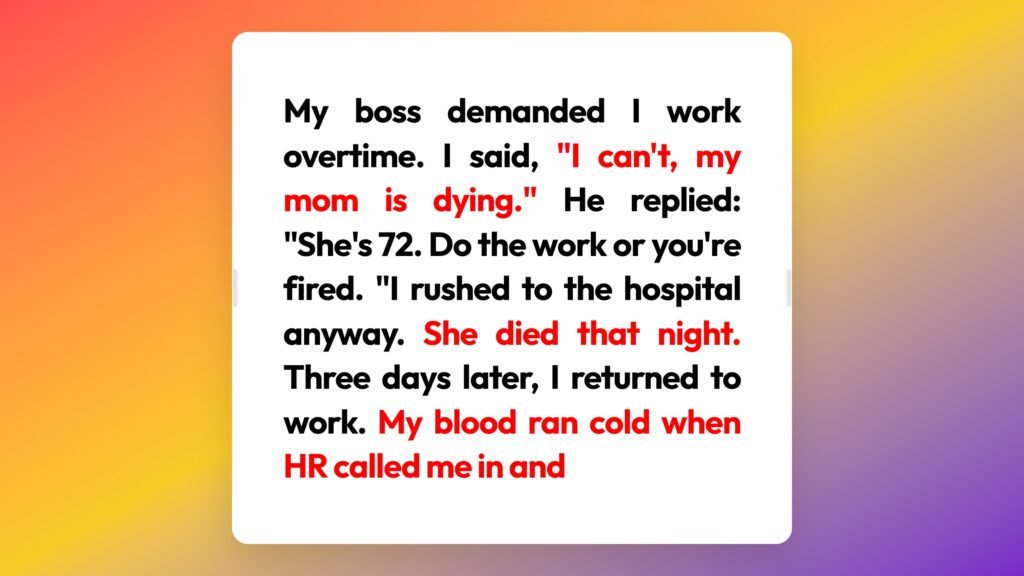
My Mom First Instead : In today’s fast-paced world, especially in India where careers are often seen as the foundation of success, choosing family over work can feel like a risk. Promotions, deadlines, and financial goals usually come first. But sometimes life forces a decision that challenges everything you believe about priorities.
This is a story about choosing a mother over a job—and how that one decision changed everything. Not just emotionally, but in ways that impacted career, mindset, and long-term direction.
Key Highlights
- A real-life inspired story from India about choosing family over career
- The emotional and practical impact of that decision
- Lessons about priorities, regret, and long-term thinking
- When to step back from work—and why it matters
- Practical guidance for balancing career and family
The Situation: When Work Was Everything
At that time, my job was my main focus. Long hours, constant targets, and pressure to perform were part of daily life. Like many professionals in India, I believed that working harder would solve everything—financial security, stability, and future comfort.
Family was important, but it was always “managed” around work.
The Turning Point: A Call That Changed Everything
One day, I got a call that my mother wasn’t well. It wasn’t just a minor issue—it required attention, time, and presence. The kind of situation where being physically there matters.
At the same time, I had important work commitments. Deadlines were close, responsibilities were high, and stepping away didn’t feel like an option.
I had to decide.
The Decision: Choosing My Mom
For the first time, I chose to step back from work completely. I informed my team, paused ongoing tasks, and focused on being with my mother.
It wasn’t easy. There was fear—fear of losing opportunities, falling behind, or damaging my career.
But I chose family.
The Immediate Impact
Initially, everything felt uncertain. Work slowed down. There were questions from colleagues. I missed deadlines and important discussions.
At the same time, something else happened.
I was present. Fully present.
I could support my mother, manage her needs, and spend time that would have otherwise been lost.
What Changed After That
1. Clarity About Priorities
I realized that work, while important, is replaceable. Time with family is not.
2. Reduced Fear of Career Risk
Stepping away didn’t destroy my career as I feared. Instead, it showed me that flexibility is possible.
3. Stronger Emotional Connection
Spending that time strengthened my relationship with my mother in ways that work never could.
4. Better Decision-Making
I started making choices based on long-term value, not short-term pressure.
Why This Matters for Indian Professionals
In India, there is strong pressure to prioritize career growth, often at the cost of personal life. Many people delay family time, assuming there will always be another opportunity later.
This story highlights a key reality: some moments don’t come back.
Career vs Family: A Practical Comparison
| Factor | Career Focus Only | Balanced / Family First Approach |
|---|---|---|
| Short-Term Growth | High | Moderate |
| Long-Term Satisfaction | Uncertain | Higher |
| Emotional Stability | Variable | Stronger |
| Regret Risk | Higher | Lower |
Step-by-Step: How to Handle Similar Situations
- Assess the urgency of the family situation
- Communicate clearly with your workplace
- Prioritize presence over multitasking
- Plan temporary work adjustments
- Stay focused on what matters long-term
- Review and realign your priorities afterward
Eligibility / Rules / Benefits of Choosing Family First
- No specific eligibility—applies to all working individuals
- Requires honest communication with employers
- Builds stronger family relationships
- Reduces long-term regret
- Improves emotional well-being
Pros and Cons of Putting Family First
Pros
- Stronger relationships
- Emotional clarity and satisfaction
- Better life balance
- Reduced long-term regret
Cons
- Temporary career slowdown
- Financial pressure in some cases
- Need for workplace adjustment
Common Mistakes to Avoid
- Ignoring early signs of family needs
- Assuming work cannot be paused
- Delaying important personal decisions
- Overestimating short-term career risks
Practical Tips for Indian Readers
- Keep emergency plans ready for family situations
- Build savings to handle unexpected breaks
- Communicate openly with your employer
- Value time with parents while you have it
- Re-evaluate priorities regularly
FAQs
Is it risky to prioritize family over work?
It can have short-term impact, but often leads to better long-term balance and satisfaction.
Will this affect career growth?
Possibly in the short term, but not necessarily in the long run.
How do I communicate this decision at work?
Be clear, honest, and professional about your situation.
What if I cannot afford to take time off?
Try partial adjustments like flexible work or temporary leave.
Is this approach practical for everyone?
It depends on individual circumstances, but prioritizing family when necessary is important.
What is the biggest takeaway?
Some moments with family are more valuable than any career milestone.
Conclusion
Choosing my mother over my job felt like a difficult decision at the time. But looking back, it became one of the most important choices I ever made.
Work continues. Opportunities return. But time with loved ones is limited.
For many people in India balancing career and family, this story offers a simple reminder: success is not just about professional growth. It is also about being present for the people who matter most—when they need you the most.