
I Canceled Easter Dinner — I’m Done Paying for Everyone

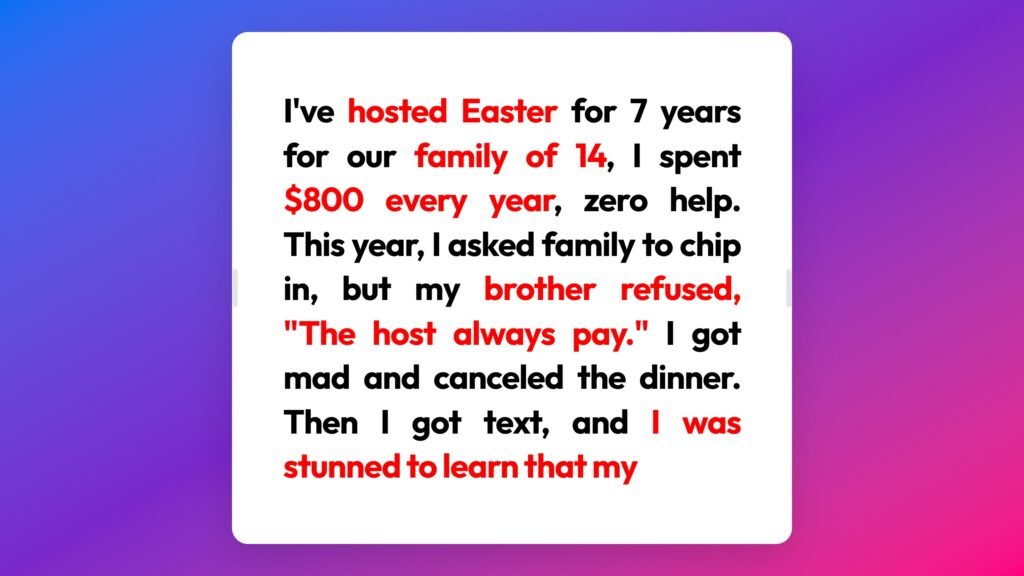
Canceled Easter Dinner : Family traditions are meant to bring people together. In India and many parts of the world, gatherings like festivals or special dinners are often built around one person organizing, cooking, and paying for everything. At first, it feels natural. But over time, it can turn into an unspoken expectation—and eventually, a burden.
This is a story about reaching that breaking point. About canceling Easter dinner, saying “no,” and what happened after choosing self-respect over obligation.
Key Highlights
- A real-life inspired story about family expectations and boundaries
- Why constantly paying for others creates hidden pressure
- What happens when you finally say “no”
- Practical lessons on setting boundaries with family
- How to handle guilt and reactions
The Situation: It Started as a Good Intention
For years, I hosted family dinners. It started small—just helping out, covering a bill here and there, organizing meals so everyone could enjoy time together. No one asked me directly, but gradually, it became expected.
Every festival, every gathering, every “let’s meet” plan—somehow, it always came back to me arranging everything.
And paying for everything.
When It Became a Problem
At first, I ignored it. I told myself it was fine. That this is what family does. But over time, patterns became clear:
- No one offered to split costs
- No one asked if I was okay handling everything
- People showed up, ate, and left
- The responsibility stayed with me
It wasn’t just about money. It was about effort, planning, and feeling taken for granted.
The Breaking Point
Before Easter, I started planning again—menu, groceries, seating, budget. And then it hit me: no one had even asked if I wanted to host.
It was just assumed.
That moment changed everything.
The Decision: Canceling Dinner
I sent a simple message: “I’m not hosting Easter dinner this year.”
No long explanation. No justification.
Just a boundary.
The Immediate Reactions
The responses came quickly—and they were mixed:
- Some were surprised
- Some were silent
- Some indirectly questioned the decision
- A few understood immediately
And yes, there was guilt. A lot of it.
But there was also something new: relief.
What Changed After That
1. People Started Taking Responsibility
Without one person handling everything, others had to step in. Plans were shared, responsibilities divided.
2. Respect Increased
Setting a boundary made others realize the effort involved.
3. Guilt Reduced Over Time
The initial discomfort faded as the benefits became clear.
4. Healthier Dynamics Formed
Family interactions became more balanced and fair.
Why This Happens (Especially in Families)
| Reason | What Happens | Result |
|---|---|---|
| One person takes initiative | Others step back | Responsibility becomes one-sided |
| No boundaries set | Expectations grow | Burnout |
| Avoiding conflict | No discussion | Resentment builds |
Step-by-Step: How to Set Boundaries Without Drama
- Identify what is bothering you clearly
- Decide what you are no longer willing to do
- Communicate simply and directly
- Avoid over-explaining
- Stay consistent with your decision
- Allow others to adjust
Eligibility / Rules / Benefits of Setting Boundaries
- Applies to anyone feeling over-responsible
- Requires clarity and consistency
- Reduces emotional and financial stress
- Builds mutual respect
- Creates healthier relationships
Pros and Cons of Saying “No”
Pros
- Reduces burnout
- Improves self-respect
- Encourages shared responsibility
- Creates fairer dynamics
Cons
- Initial guilt
- Possible negative reactions
- Temporary discomfort
Common Mistakes People Make
- Waiting too long before setting boundaries
- Expecting others to “just understand”
- Giving in after saying no
- Over-explaining decisions
Practical Tips (Especially for Indian Families)
- Rotate hosting responsibilities
- Discuss costs openly
- Share planning tasks
- Set expectations early
- Normalize saying “not this time”
FAQs
Is it wrong to stop paying for family gatherings?
No, shared responsibility creates healthier relationships.
How do I handle guilt after saying no?
Understand that boundaries are necessary for long-term balance.
What if family reacts negatively?
Stay consistent. Reactions usually change over time.
Should I explain my decision in detail?
Not necessary. Keep communication simple and clear.
Will this damage relationships?
In most cases, it improves respect and balance.
How do I start setting boundaries?
Start with one situation and stay consistent.
Conclusion
Canceling Easter dinner was not about one event. It was about changing a pattern that had quietly built over time. It was about choosing balance over obligation and respect over silent frustration.
In many families, especially where one person takes on more responsibility, this situation is common. But the solution is simple—even if it’s uncomfortable: set boundaries.
Because sometimes, the most important thing you can do for your relationships is not to give more—but to stop giving in the wrong way.