
12 Moments That Show Children Understand Kindness and Compassion Better Than We Do

Children often amaze grown-ups with their fresh thinking and natural creativity. Simple daily moments, like finishing homework or solving small problems, quietly reveal powerful lessons about patience, curiosity, and growth. When we take time to notice how a child approaches challenges, we begin to understand their unique way of learning. These little actions show that success is not always about perfection, but about trying, adapting, and improving every single day.
My daughter once had to describe her parent’s job for school. She wrote, “At work, my mom stands around many men who give her money and argue about who goes first.” I was called in immediately. I felt embarrassed, thinking the worst about how it sounded. In reality, I work at an auto parts shop during busy sales. She had only seen the crowd and chaos, not the details. At school, she even acted out my role, calling people one by one. The teacher couldn’t stop laughing and praised her observation. She earned top marks and a funny nickname.
I walked into the kitchen and saw my seven-year-old drawing all over the wall. I was ready to scold him instantly. But he explained he was creating a “taste map” of everything in the fridge. What looked like a mess turned out to be a creative system of organizing flavors. The wall became a colorful chart instead of damage, and I found myself admiring his imagination rather than feeling upset.
I accidentally missed my child’s soccer match and expected him to be angry. Instead, he set multiple alarms for the next game and left me a note so I wouldn’t forget again. I expected frustration, but received kindness and thoughtful planning. His simple act showed understanding far beyond his age.
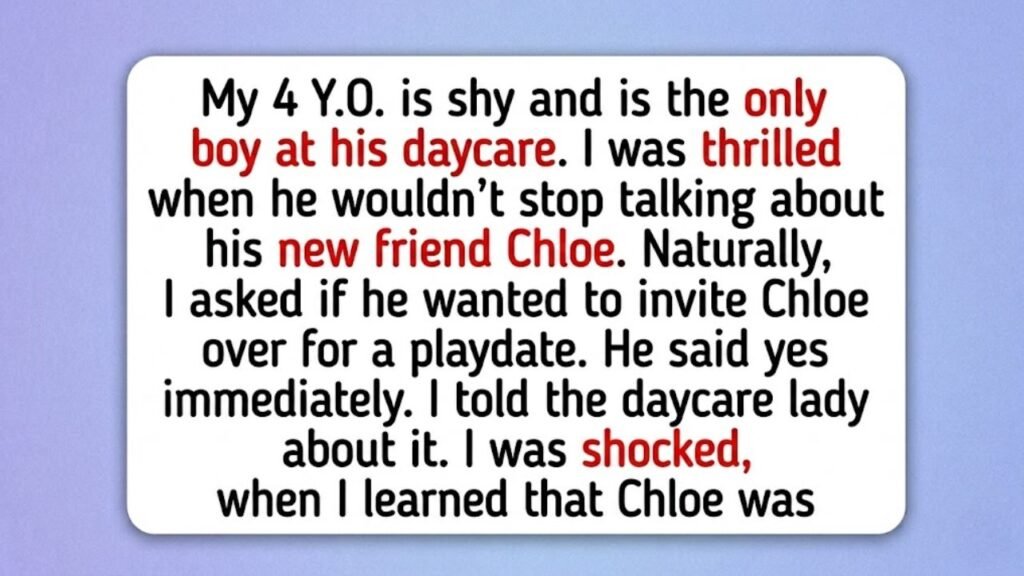
My shy four-year-old kept talking about a new friend named Chloe at daycare. I happily suggested inviting her over. Later, I discovered Chloe wasn’t another child at all, but the daycare’s cat. His innocence turned a simple misunderstanding into a funny and heartwarming moment.
I saw my daughter crying over a broken toy and assumed I would need to replace it. Instead, she grabbed tape and art supplies and began redesigning it. She didn’t see something broken, she saw a chance to create something better. By the end, she proudly held her “new” toy, happier than before.
Late at night, my son asked for help with homework, and I thought he had forgotten it. He showed me a small folded paper hidden in a book. Inside was his assignment, turned into a tiny illustrated story. He completed the task but added his own creative twist.
I noticed strange drawings on our grocery list and assumed it was random scribbling. Looking closer, I saw stars next to vegetables and smiley faces on fruits. He had created his own guide for healthy eating. It was thoughtful and surprisingly organized.
After a stressful day, I came home expecting more chaos. Instead, my child had drawn a full “happy day plan” for our family. It included meals, playtime, and quiet moments for relaxation. He noticed my stress and tried to fix it in his own simple way. That small gesture made a big difference.
When rain canceled our park visit, I expected complaints. Instead, my child created a new indoor game using paper and imagination. He turned disappointment into an opportunity for fun and creativity.
I walked in on my kids arguing over a blanket and prepared for conflict. Instead, they calmly made a sharing schedule, taking turns and planning time together. Their ability to negotiate showed fairness and maturity.
One evening, I found my daughter drawing a comic about our family’s week. It was filled with humor and small details I hadn’t noticed. Through her drawings, I saw our life from her unique perspective.
After a long day, I expected a messy home. Instead, everything was clean and organized. My child simply said, “I wanted you to feel happy.” It was a small but meaningful act of care that spoke louder than words.
These everyday moments remind us that children often teach adults important lessons about creativity, empathy, and problem-solving. Recognizing their efforts helps build confidence and encourages lifelong learning.
