
10 Unexpected Job Interview Stories People Still Talk About

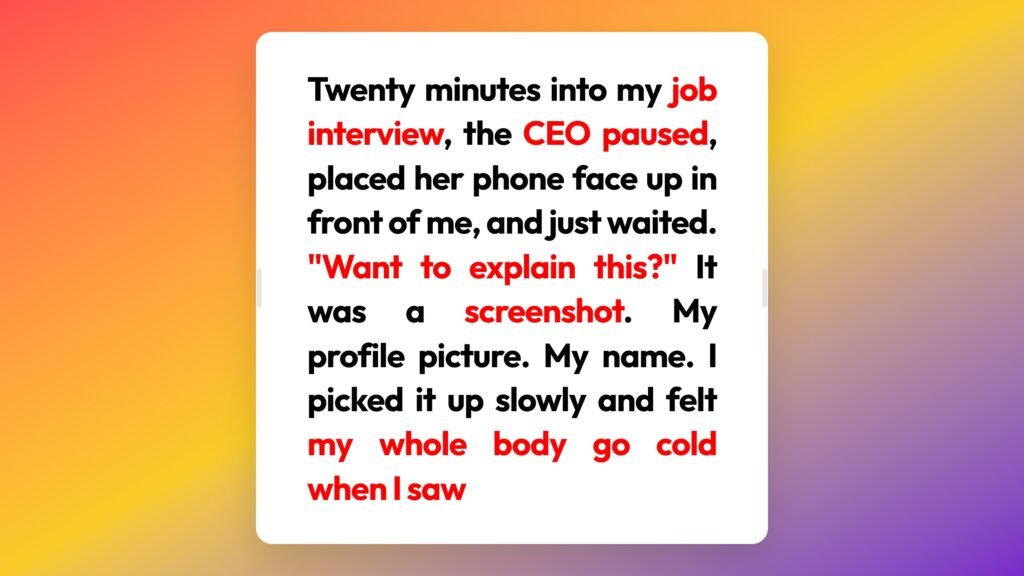
Job Interview Stories : Job interviews are usually predictable—questions about experience, skills, and expectations. But sometimes, interviews take unexpected turns. In India and across the world, candidates and employers have experienced moments so unusual that they are remembered long after the interview is over.
These stories are not just entertaining—they offer practical insights into how to handle pressure, think on your feet, and respond to situations that are not part of standard preparation.
Key Highlights
- 10 real-life inspired unexpected interview stories
- Examples from Indian and global workplaces
- Lessons on handling pressure and unpredictability
- Common mistakes and smart responses
- Practical tips to prepare beyond standard questions
1. The Interview That Started With Silence
A candidate walked into a room where the interviewer said nothing for several minutes, observing reactions.
Lesson: Stay calm and composed even in uncomfortable situations.
2. Solving a Problem Without Instructions
An interviewer gave a vague task without clear directions, testing how the candidate approached ambiguity.
Lesson: Clarify before acting.
3. The Unexpected Personal Question
A candidate was asked about a personal failure unrelated to work, to assess emotional awareness.
Lesson: Be honest but structured in your response.
4. Group Interview Turned Competitive
Candidates were asked to solve a problem together, but competition quickly emerged.
Lesson: Collaboration matters more than dominance.
5. The Interview That Happened in a Cafeteria
Instead of a formal setup, the interviewer chose an informal environment to observe behavior.
Lesson: Professionalism should be consistent.
6. A Technical Question With No Right Answer
A candidate was asked a question designed to have no correct answer, testing thinking process.
Lesson: Focus on approach, not perfection.
7. The Interviewer Who Interrupted Constantly
The interviewer kept interrupting to test patience and communication control.
Lesson: Maintain composure and clarity.
8. A Real-Time Task During Interview
A candidate was asked to complete a live task under time pressure.
Lesson: Execution under pressure is critical.
9. The Question That Challenged Values
An ethical dilemma was presented to evaluate decision-making.
Lesson: Values matter as much as skills.
10. The Interview That Tested Observation
A candidate was asked questions about details in the room to assess awareness.
Lesson: Attention to detail is important.
Impact of Unexpected Interview Situations
| Scenario | What Was Tested | Key Skill |
|---|---|---|
| Silence | Emotional control | Composure |
| Ambiguous task | Problem-solving | Clarity |
| Interruptions | Communication | Patience |
| Live task | Execution | Performance under pressure |
Step-by-Step: How to Handle Unexpected Interview Situations
- Stay calm and avoid reacting emotionally
- Take a moment to understand the situation
- Ask clarifying questions if needed
- Focus on your thought process
- Communicate clearly and confidently
- Do not rush—structure your response
Eligibility / Rules / Benefits of Strong Interview Handling
- Applicable to all job seekers
- Requires practice and awareness
- Improves confidence
- Enhances problem-solving ability
- Increases chances of selection
Pros and Cons of Unexpected Interview Techniques
Pros
- Tests real-world skills
- Reveals true behavior
- Encourages critical thinking
- Improves hiring decisions
Cons
- Can create stress
- May feel unfair
- Not always standardized
Common Mistakes Candidates Make
- Panicking under pressure
- Rushing answers
- Not asking questions
- Focusing only on “correct” answers
Practical Tips for Indian Job Seekers
- Prepare for uncertainty, not just questions
- Practice thinking aloud
- Stay professional in all environments
- Focus on communication and clarity
- Build confidence through mock interviews
FAQs
Why do interviewers ask unexpected questions?
To test real thinking, behavior, and problem-solving skills.
How should I react to unusual situations?
Stay calm, understand the situation, and respond thoughtfully.
Is it okay to ask questions during an interview?
Yes, it shows clarity and confidence.
What matters more—answer or approach?
Approach and reasoning are often more important.
Can unexpected interviews affect performance?
Yes, but preparation and mindset can reduce impact.
What is the biggest takeaway?
Interviews test behavior as much as knowledge.
Conclusion
These 10 stories show that job interviews are not always predictable—and that’s intentional. Employers want to see how candidates handle real situations, not just prepared answers.
In India and across the world, success in interviews depends not only on knowledge but also on adaptability, communication, and composure. The best way to prepare is not to memorize answers—but to build the ability to think clearly under pressure.
Because sometimes, the most unexpected moment is the one that defines the outcome.